

Nestled in the rugged highlands of southwestern Uganda, Bwindi Forest National Park stands as one of Africa’s most treasured natural wonders. Covering approximately 331 square kilometres of ancient montane and lowland forest, Bwindi is a living testament to the resilience of nature and the power of conservation. Recognized as a UNESCO World Heritage Site since 1994, this remarkable park straddles the Albertine Rift Valley along the borders of Uganda safaris, the Democratic Republic of Congo, and Rwanda — a region celebrated as one of the most biologically diverse on Earth.
The forest’s name itself tells a story. “Bwindi” derives from the Rukiga word meaning “darkness” or “place of darkness,” a fitting description for a dense, fog-draped jungle where ancient trees form an impenetrable canopy that blocks sunlight from the forest floor. Yet within this seemingly forbidding darkness thrives an extraordinary abundance of life that has earned Bwindi its reputation as one of the most important conservation areas on the African continent.
At the heart of Bwindi’s global significance lies its population of mountain gorillas (Gorilla beringei beringei) — one of the most endangered great apes on Earth. With roughly half of the world’s remaining mountain gorilla population calling this forest home, Bwindi is not merely a tourist destination but a critical lifeline for a species that teeters on the edge of extinction.
Geological and Ecological History
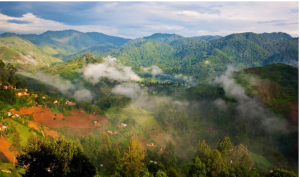
Bwindi forest National park story begins millions of years ago during the formation of the Albertine Rift, a branch of the East African Rift System. The tectonic activity that shaped this region produced dramatic topography — steep ridges, fast-flowing rivers, and deep valleys — creating a landscape of extraordinary ecological complexity. Unlike many African forests that retreated or disappeared during the Pleistocene Ice Ages, Bwindi persisted as a forest refuge, a critical factor in explaining its unparalleled biodiversity today.
The forest’s age — estimated at over 25,000 years — means it served as a refuge for plant and animal species during periods of severe climatic change. Species that might have disappeared elsewhere survived within Bwindi’s boundaries, contributing to the extraordinary concentration of endemic and rare species found here today. This deep biological history is precisely why scientists and conservationists regard the park as irreplaceable.
The forest is broadly categorized into montane forest at higher altitudes and lowland forest in the valley bottoms, with significant transitional zones in between. This altitudinal variation means Bwindi effectively contains multiple ecosystems within a single relatively compact area, driving the remarkable species richness that characterizes the park.
Biodiversity: A Living Encyclopedia
Mountain Gorillas
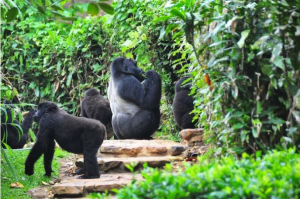
No discussion of Bwindi is complete without focusing on its most iconic residents. Mountain gorillas are the largest primates on Earth, with adult males — known as silverbacks — weighing up to 220 kilograms. They are gentle, highly intelligent, and deeply social animals that live in cohesive family groups typically led by a dominant silverback.
As of the most recent censuses, Bwindi supports approximately 460 mountain gorillas distributed across multiple habituated and non-habituated groups. Habituation — the process by which gorillas are gradually accustomed to human presence over a period of two to three years — is the foundation of gorilla tourism. Currently, more than 20 gorilla families in Bwindi are habituated and open to visitor tracking.
The conservation story of the mountain gorilla is one of the great wildlife recovery narratives of the 20th and 21st centuries. In the 1980s, the global population had plummeted to fewer than 300 individuals. Sustained conservation efforts, community engagement, and carefully managed tourism have helped numbers recover steadily, making mountain gorillas the only great ape whose population is currently increasing.
Birds of Bwindi
For birdwatchers, Bwindi is nothing short of paradise. The park hosts over 350 bird species, including an extraordinary 23 species endemic to the Albertine Rift — a global biodiversity hotspot. Notable species include the African green broadbill, Shelley’s crimsonwing, the Grauer’s rush warbler, and the handsome francolin. The African emerald cuckoo and numerous species of sunbird add brilliant colour to the forest understory, while raptors such as the crowned hawk-eagle soar above the canopy.
Mammals, Reptiles, and Plants
Beyond gorillas, Bwindi forest national park is home to chimpanzees, forest elephants, giant forest hogs, African golden cats, and more than 120 mammal species in total. The park contains over 1,000 species of flowering plants, including ferns, orchids, and ancient hardwood trees. More than 220 butterfly species flutter through the forest glades, and the herpetological diversity includes numerous endemic amphibians and reptiles.
Gorilla Trekking: The Signature Experience
Tanzania safaris and Gorilla trekking is the primary activity that draws visitors to Bwindi from every corner of the globe. Each day, small groups of no more than eight tourists set out with armed rangers and experienced trackers to locate a habituated gorilla family in the wild. The trek can last anywhere from 30 minutes to an entire day, depending on where the gorillas have chosen to rest and feed.
Upon locating the gorillas, visitors are permitted to spend exactly one hour in their presence. This strict time limit is enforced to minimize stress on the animals and reduce disease transmission risk — gorillas share approximately 98% of human DNA and are susceptible to human respiratory illnesses. Visitors must maintain a minimum distance of seven metres from the gorillas, though the gorillas themselves do not always respect this boundary.
The experience of sitting in the ancient forest while a silverback calmly grazes a few metres away, while juveniles tumble and play overhead, and while mothers nurse their infants, is widely described as one of the most moving wildlife encounters on Earth. Many visitors report it as a transformative experience that fundamentally shifts their relationship with the natural world.
The Four Sectors
Bwindi is divided into four gorilla trekking sectors, each with distinct characteristics:
- Buhoma — The oldest and most established sector, located on the northern edge of the park. It offers the most tourist infrastructure and is the traditional starting point for most visitors.
- Ruhija — Situated at higher altitude, Ruhija offers magnificent highland scenery alongside gorilla trekking and is particularly popular with birdwatchers.
- Rushaga — Located in the south, Rushaga hosts the largest number of habituated gorilla families, making it a popular choice for travellers coming from Rwanda.
- Nkuringo — The most remote and challenging sector, Nkuringo rewards intrepid travellers with stunning views over the Congo safaris Basin and a more adventurous trekking experience.
Conservation and Community
Threats and Challenges
Despite its protected status, Kenya safari and Bwindi face significant conservation pressures. Encroachment from surrounding agricultural communities remains a persistent threat, as one of the most densely populated rural regions in Africa borders the park. Forest-edge communities depend heavily on natural resources, creating pressure on the park’s boundaries.
Disease transmission between humans and gorillas is another critical concern. Conservation managers implement strict protocols — health checks for park staff, mask requirements during trekking, and immediate isolation of sick tourists — to minimize pathogen transfer to the gorilla population.
Climate change poses an emerging long-term threat, with shifts in rainfall patterns and temperatures altering forest composition and potentially affecting food availability for gorillas and other wildlife.
Community Conservation: A Model for Africa
One of Bwindi’s most significant achievements extends beyond wildlife conservation: it has pioneered a model of community-integrated conservation that has been studied and replicated across Africa.
The Uganda Wildlife Authority allocates 20% of all park revenue directly to surrounding communities through the Revenue Sharing Programme. These funds support the construction of schools, health centres, clean water infrastructure, and roads. The Bwindi Mgahinga Conservation Trust further supports community livelihood projects, and thousands of local people are employed as rangers, guides, trackers, porters, and hospitality staff.
This integrated approach recognizes a fundamental truth: conservation is only sustainable when local communities perceive the forest as an economic and social asset rather than a threat to their livelihoods.
Best Time to Visit and Practical Information
Bwindi can be visited year-round, but the dry seasons — from June to August and December to February — offer the most comfortable trekking conditions with drier trails and clearer visibility. The long rainy season (March to May) and short rainy season (September to November) make trails muddy and slippery but bring lush, green forest and fewer crowds.
Visitors should be prepared for challenging terrain regardless of season. Sturdy waterproof hiking boots, long trousers, gardening gloves to protect against stinging nettles, and a waterproof jacket are essential. Most lodges offer the services of a porter — a wonderful opportunity to support local employment while easing the physical demands of the trek.
Accommodation ranges from basic community-run guesthouses to luxury eco-lodges perched on ridge tops with spectacular views over the forest. Operators such as Bwindi Lodge, Clouds Mountain Gorilla Lodge, and Mahogany Springs provide high-end safari experiences that blend comfort with environmental responsibility.
Questions and Answers
Q: How do I obtain a gorilla trekking permit for Bwindi? Permits must be purchased through the Uganda Wildlife Authority (UWA) or through a licensed tour operator. The current fee is USD 700 per person per trek. Demand consistently outstrips supply, particularly during peak season, so permits should be booked several months — and ideally a year — in advance. Many visitors arrange permits as part of a broader Uganda safari package through a registered operator.
Q: Is gorilla trekking physically demanding? Yes, trekking in Bwindi requires a reasonable level of physical fitness. Trails can be steep, slippery, and dense with vegetation. Treks vary enormously in duration — from under an hour to a full day — depending on gorilla location. Anyone with mobility concerns should consult the Uganda Wildlife Authority, which provides sedan chair-style “gorilla stretchers” for visitors who need assistance traversing difficult terrain.
Q: What are the age restrictions for gorilla trekking? Children under 15 years of age are not permitted to participate in gorilla trekking. This rule exists to protect gorillas from childhood diseases and to ensure that the experience is managed safely.
Q: Can I see mountain gorillas in the wild anywhere else? Mountain gorillas exist in only one place on Earth: the Virunga Massif (shared between Rwanda, Uganda, and the DRC) and Bwindi Impenetrable Forest in Uganda. Bwindi is the only habitat exclusive to this subspecies outside the Virunga volcanic mountains. Rwanda’s Volcanoes National Park and the DRC’s Virunga National Park offer alternative trekking opportunities, but Bwindi’s unique forest setting distinguishes its experience significantly.
Q: How has tourism affected the gorilla population? When managed responsibly, gorilla tourism has been broadly positive for the species. Tourism revenue funds anti-poaching operations, habitat protection, and community programmes that reduce illegal resource extraction. However, the risk of disease transmission requires constant vigilance, and conservationists continue to refine protocols to minimize human impact on gorilla health and behaviour.
Q: What other wildlife might I encounter during a trek? While gorillas are the primary focus, encounters with forest elephants, chimpanzees, various monkey species (including the L’Hoest’s monkey and the red-tailed monkey), and a dazzling variety of birds are all possible during a Bwindi trek. The forest itself — draped in mosses, ferns, and ancient hardwoods — is itself an unforgettable spectacle.
Q: Is bwindi forest national park safe for tourists? Bwindi is considered safe for visitors. The Uganda Wildlife Authority maintains a trained and well-equipped ranger force throughout the park, and gorilla trekking groups are always accompanied by armed rangers. Visitors should exercise standard travel precautions and consult current travel advisories from their home country’s foreign affairs department.
Key Takeaways
Before diving deeper, here are the essential facts every visitor and conservation enthusiast should know about Bwindi Impenetrable Forest National Park:
- 🦍 Gorilla Capital of the World: Bwindi is home to approximately 460 mountain gorillas, representing nearly half of the global population of this critically endangered species.
- 🌿 Ancient Forest: The park’s forest is estimated to be over 25,000 years old, surviving through the last Ice Age when much of Africa’s forests retreated.
- 🌍 UNESCO World Heritage Site: Designated in 1994 for its outstanding universal value in biodiversity and gorilla conservation.
- 🦋 Unrivalled Biodiversity: The park hosts over 120 mammal species, 350+ bird species (including 23 Albertine Rift endemics), 220 species of butterflies, and more than 1,000 flowering plant species.
- 🏔️ Altitude Range: Elevations range from 1,160 metres to 2,607 metres above sea level, creating diverse microclimates and habitats.
- 👨👩👧 Community Integration: The park actively integrates surrounding Bafumbira and Bakiga communities into conservation through revenue sharing and tourism employment.
- 🎯 Four Tourism Sectors: Gorilla trekking is organized across four sectors — Buhoma, Ruhija, Rushaga, and Nkuringo — each offering unique experiences.
- 💰 Permit Cost: A single gorilla trekking permit costs USD 700, a price structured to fund conservation and limit visitor impact.
- ✈️ Access Point: The nearest international gateway is Entebbe International Airport, with Bwindi approximately 8–10 hours by road or reachable by charter flight to Kihihi or Kisoro.
Conclusion
Bwindi Forest National Park is more than a wildlife destination — it is one of Earth’s most vital conservation frontiers. In an age defined by accelerating biodiversity loss and climate disruption, Bwindi stands as proof that determined conservation effort, combined with genuine community partnership, can reverse the trajectory of extinction and preserve irreplaceable natural heritage for generations to come.
The Rwanda safaris and mountain gorillas of Bwindi are not merely charismatic symbols of a wild Africa — they are barometers of ecosystem health, ambassadors for the ancient forest they inhabit, and powerful reminders of the profound kinship between humans and the natural world. Every visitor who treks through Bwindi’s dense undergrowth to spend an hour in a gorilla family’s presence takes home not just a memory but a sense of responsibility.
Protecting Bwindi forest national park is not the concern of Uganda alone. The forest belongs, in a meaningful sense, to all of humanity. Its ancient trees have witnessed millennia of change and survived when lesser ecosystems perished. Ensuring that Bwindi and its gorillas endure for the next 25,000 years demands continued investment in conservation science, community development, responsible tourism, and global solidarity.
For anyone who has ever looked into the eyes of a mountain gorilla and glimpsed something profound and familiar gazing back — that responsibility is not a burden. It is a privilege.